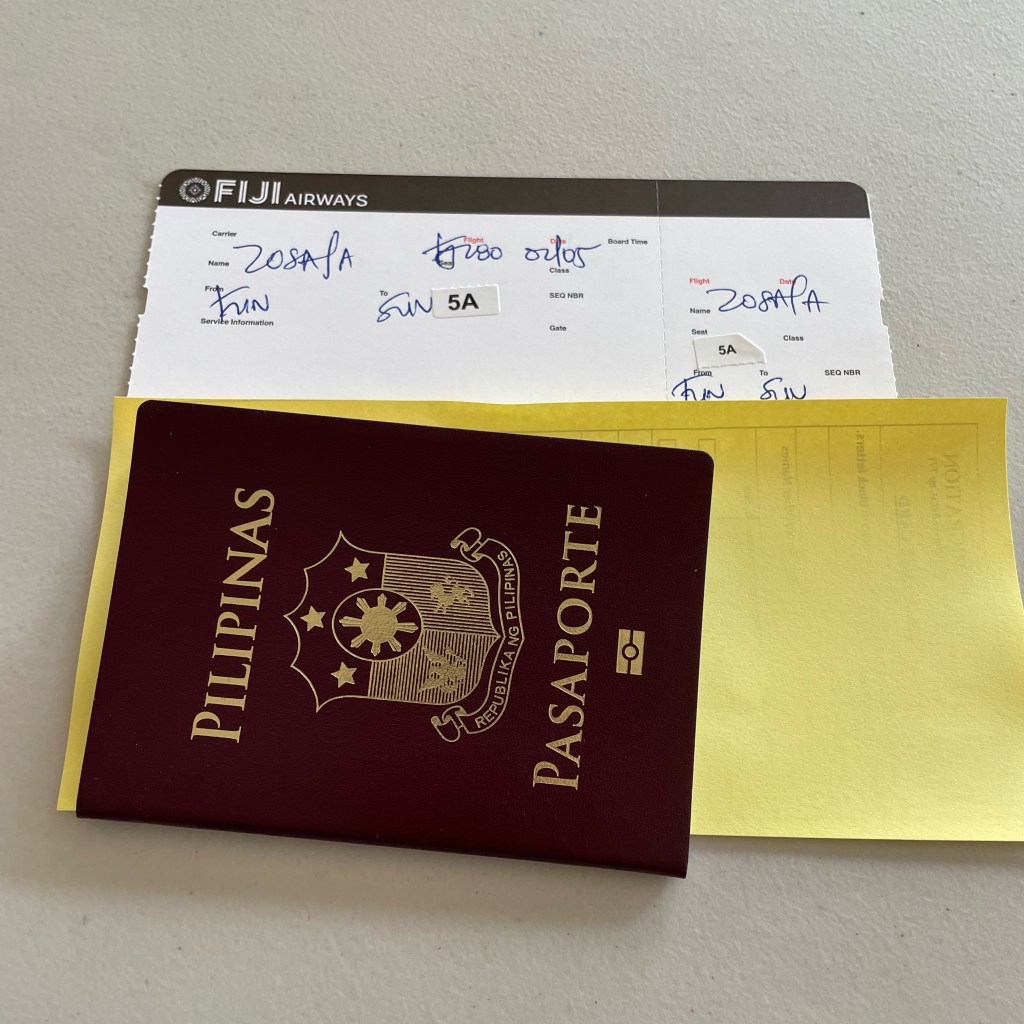
According to The Henley Passport Index in 2023, the Philippine passport ranks as the 74th most powerful in the world, granting access to 67 countries visa-free. In comparison, Singapore is 1st with 194. And if the institution followed statistical rankings, my home country actually ranks 130th, as there are 129 nations with better privileges.
That is a frustrating reality I deal with on my travels. But past a certain point of complaining, I need to channel my energy into applying anyways.
As the Serenity Prayer of my Catholic upbringing tells me:
“Grant me the serenity to accept the things I cannot change, the courage to change the things I can, and the wisdom to know the difference.”
Besides patience and fortitude, as a weak passport holder, here are 5 things I found useful when applying for visas.
1. Always check a country’s official website / inquire directly with the embassy
Site aggregators or agencies are helpful in providing a comprehensive glimpse in one go. However, a final confirmation from official sources on whether a visa is required and what documents are needed is almost mandatory.
Not that site aggregators or agencies have an incentive to screw anyone over. But information gets updated on a more regular basis than their data refresh. If I cannot go on a trip, I cannot hold anyone but myself accountable.
I remember wanting to go to Qatar and Azerbaijan. Websites online mentioned that Filipinos were eligible for e-visa. In Qatar, I understood that was the situation before Covid-19. But since then, and until the beginning of 2023 at least, I needed to physically apply. Back then, if I relied on the information I found online, my itinerary would have been drastically different and I would have had a nasty surprise waiting.
Another example is Ecuador. Before 2022, Filipinos can get in this country visa-free. And that’s the information other sites and even my friends relayed to me. Nowadays, that doesn’t work anymore. I can only speculate why. But moving on….
2. Make booking.com your friend

Proof of accommodations are often a pre-requisite for my applications. Or at least, they serve as evidence that things have been thought through and that I’m not going to end up in the streets or planning to hide somewhere.
But it’s a catch-22. Why make a booking when there’s no guarantee that I’ll even get a visa or end up going? Or what if I simply haven’t had the time to evaluate the options?
Booking.com provides plenty of choices without a commitment to stay at the end. These are cancellable.
The only caveat I make is to stay on top of all the reservations. Otherwise, the website and the businesses make a profit from people simply forgetting.
I’ve forgotten twice. I had to make a plea. Thankfully, the hosts understood.
Surprisingly, when one of my flights got cancelled, that’s when the hotel refused to give me a refund. I suggest to not leave it up to chance.
3. Build on the documents used for a previous application.
All the documents I previously gathered are saved. Chances are, most of these will come in handy. And there’s nothing worse than starting from scratch, especially when completing an application can easily consume an hour or two.
Some files might not need an update (passport, residence permit, vaccinations, birth certificate, etc.) while others might need a refresh (travel history, bank statements, etc). Having a base doesn’t eliminate the inconvenience. But at the very least, it’s reduced.
4. Go after the powerful visas that pave the way for others
The powerful visas (generally Schengen, USA, UK, Canada, Australia, and Japan) help unlock others. Either the requirement is waived altogether. Or they are used as reliable indicators of “trustworthiness”.
I’ve gone to most of the non-Schengen European states (especially the Balkans and/or those aspiring to join Schengen) by using my Dutch work residence permit. While I still have to go through immigration and explain myself, that is easier than doing both an application and an explanation.
I also got into Ireland using my UK visa. The scheme is not so straightforward (a valid UK visa, a prior entry into the UK, and the entry period has to not have lapsed). This new 2023 scheme is applicable to Filipinos and some other nationalities.
Multiple websites say parts of Latin America and the Caribbean can be accessed through this route. I’ve never done it myself. I’m planning to. But I would suggest to confirm with the official website and/or embassy (back to point 1).
5. Unless required by governments, going through an agency is almost never worth it.

I remember having to go to Canada and Australia. In both instances, an agency was quoting 1000 Euros each for the work they’ll perform. And the actual cost… it is closer to 10% of that.
And what will I get? Most of the time, I would have to gather all the documents and do the inputs myself… but in an offline sheet. Physical appearance and biometric scans generally do not allow proxies. So the only value for money would be the research for the requirements and making sure the forms are up to standard.
But that can be worked around easily as most government sites provide a list of requirements and corresponding samples to make sure that people get their submissions right.
For other travel tips, you can visit this link.

 How I Did My Travels