I’m no authority in what places are the must-dos. But I can tell you which are the ones I went to. I’ll sprinkle in some basic information along the way and tell you about my experience. Your trip will be different but I thought I’d share mine.
For the religious, Rome is the center of Catholic institutions. The city is also home to one of the greatest civilisations to ever rule the world. And it can be heaven for foodies are now able to taste authentic Italian food mimicked in their home countries.
To me, this is the place where I fell in love with carbonara. That is a big deal as I am a fan of red sauce.
It reaffirmed my existing but often forgotten belief that contracting taxis outside the system can get you in trouble. My friend and I were taken to a sketchy highway, by a driver who didn’t know directions, asking for extra money beyond what we agreed, and having a car that felt more ancient than the city.
And I was reminded of life’s greatest inventions – coffee, pizza, gelato, and pasta.
I don’t know how to transition from here but…
Here are five places I visited in Rome:
Colosseum
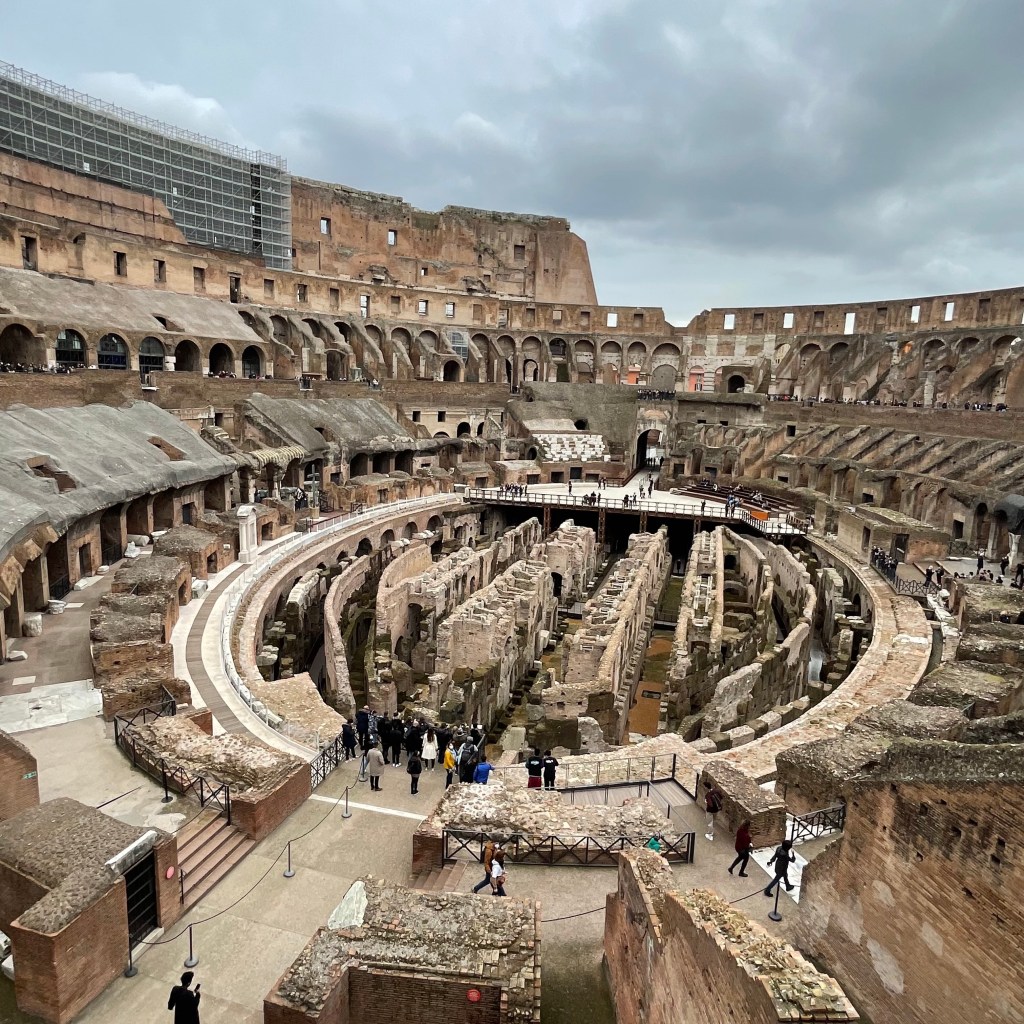
I don’t believe in must-sees. BUT, the moment the cab entered the city center, there was no way to NOT see the Colosseum.
Many people often tell me that Florence or Venice are nicer destinations to visit in Italy. But I was reminded of how great and mighty the Romans were simply by the sight of the Colosseum. So… I disagree. All these cities are equal, and I could even make the argument that Rome is superior.
Always book tickets online. There are premium ones where extra chambers can be visited – I don’t believe the extra cost was worth it.
Without dwelling on the history and architecture of the Colosseum, I have a hunch that any price paid is still worth the experience of being inside the Colosseum.
I didn’t see gladiators. But I have the movies for that. I did experience a great amount of fighting with everyone else trying to get in on all the action. The Colosseum is one of the seven wonders of the modern world. And this happens to be my first.
This is one of the instances where being a basic tourist makes the most sense. No matter how high brow I pretend to be, I am willing to step down my pedestal and advise anyone to do the checklist in Rome.
Pantheon
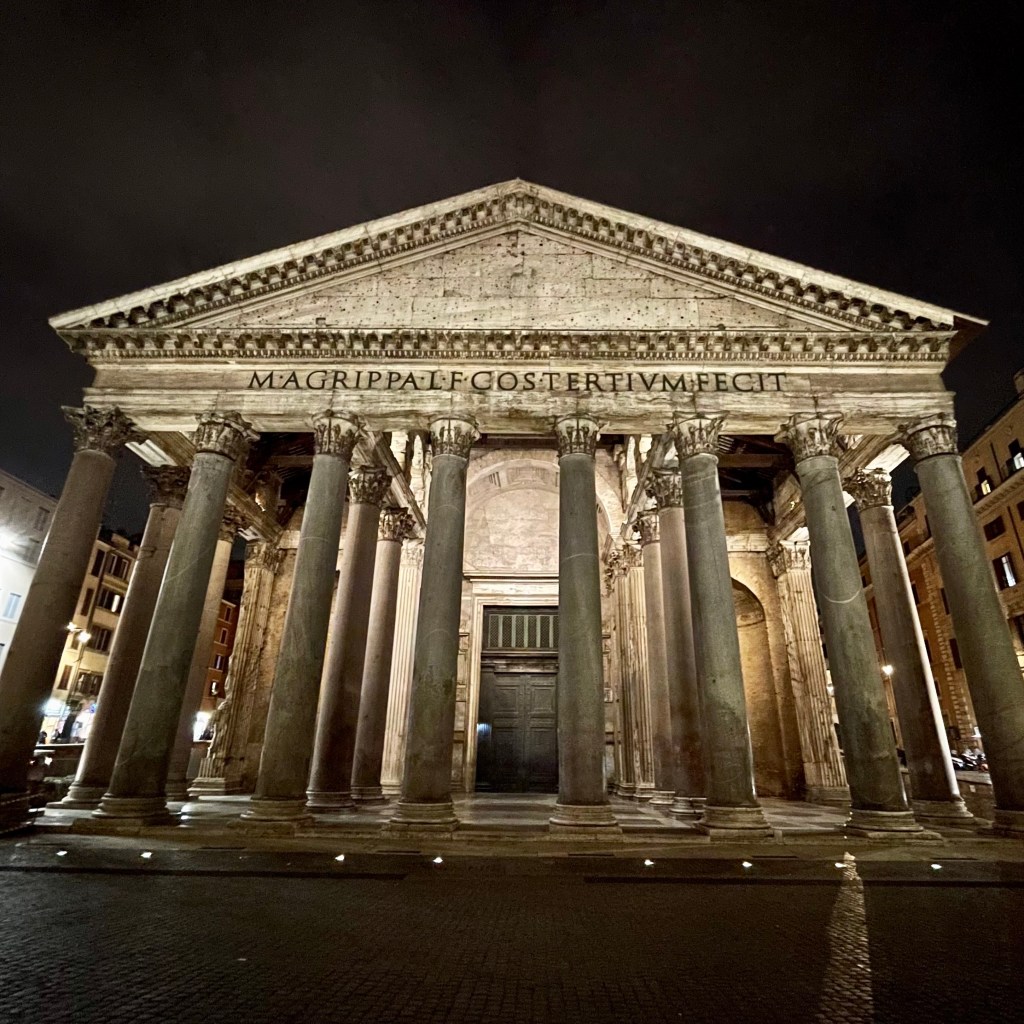
There are places where booking online and in advance helps. This is one of those. While entrance is free, being spontaneous and not planning will not be rewarded.
Having said that, the building is ancient and has survived two millenniums. This was originally intended to honour all the Roman gods. For some time now, associations with idols have been largely removed and Catholic symbols have taken over. Mass services are now regularly scheduled.
The Pantheon is known for being massive in size but unsupported in structure. There is also a massive hole at the ceiling, which brings a lot of sunlight, and can also welcome the rain (drainage systems are in place to make sure that is managed). Also, famous people like Raphael and Queen Margarita are buried there, if you are into that kind of thing.
Trevi Fountain
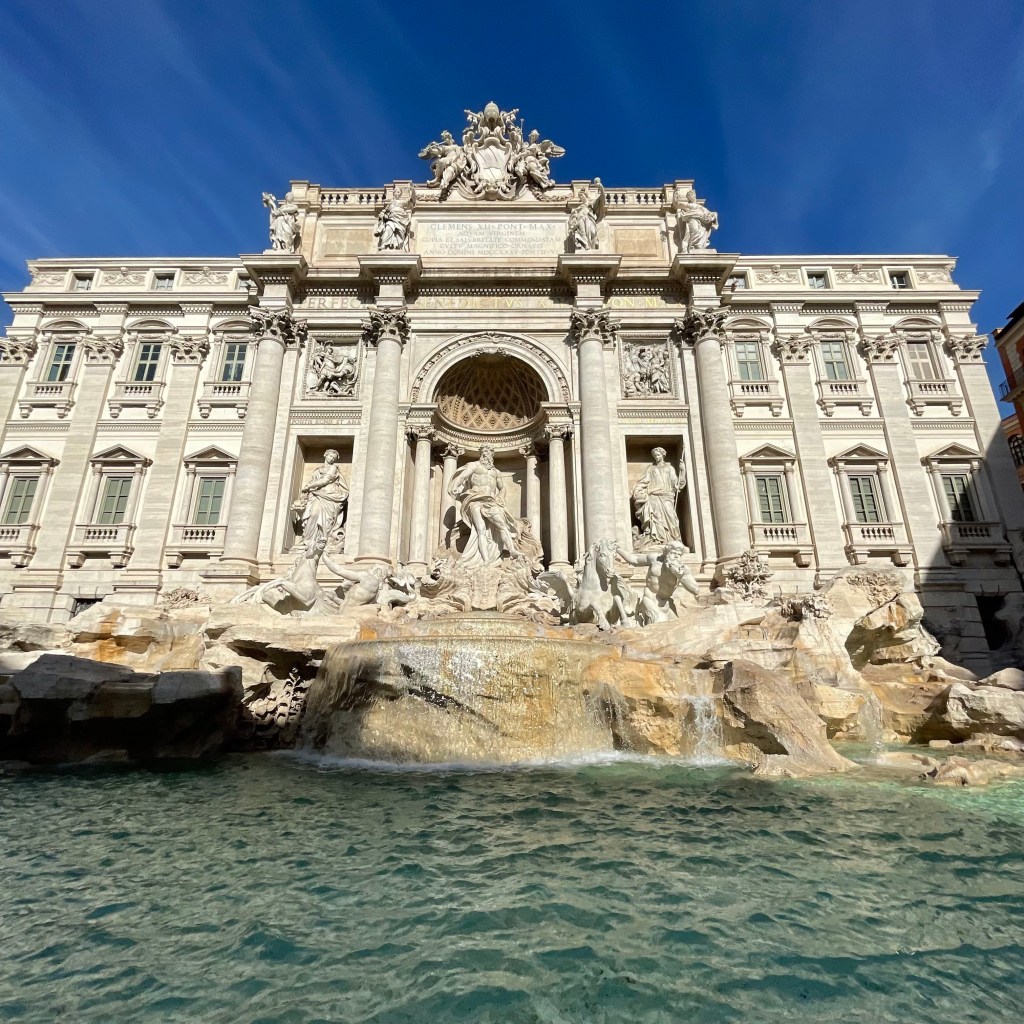
Most sights in Rome are packed with tourists. But unlike the Colosseum which has an entrance fee and a huge area for people to disperse, and the Pantheon which is crowd controlled via ticket reservation, the Trevi Fountain has none of that. So, this was where I felt most suffocated.
The legend goes that tossing a coin over one’s shoulders guarantees a return to Rome. I don’t believe in superstitions. So, I didn’t waste money on it (even coins). To be fair, I haven’t been back since. So I will leave you to decide whether the theory is proven.
Still, the emerald-like colour of the water, and the elaborate display of sea gods and mythological creatures, make the fountain a visual treat.
And I wouldn’t be too worried about pictures. Despite the huge influx of people, there are multiple angles to work from, guaranteeing an Instagrammable post can still be made.
Palatine Hill / Roman Forum

Rome is associated with seven hills. And one of them is Palatine. Don’t overthink it. No extensive physical fitness is required except for a bit of walking.
Without realising it, I straddled between the two sites. And apparently, most tourists do. The border isn’t clear or even defined.
There is no historical basis for what I’m about to say. But folklore has it that the founders of Rome (Romulus and Remus) were born in Palatine Hill.
Palatine Hill and The Roman Forum were the “happening” place of the ancient times. Consider it, Las Vegas of the past. And while the Colosseum had gladiators, this one had chariot races.
I remember rushing through the place as we started exploring the Colosseum, Palatine Hill, and the Roman Forum all in one afternoon. I suggest mixing the three in your itinerary but starting in the morning. I believe a ticket with all of them lumped together in one purchase is possible.
The Altar of the Fatherland
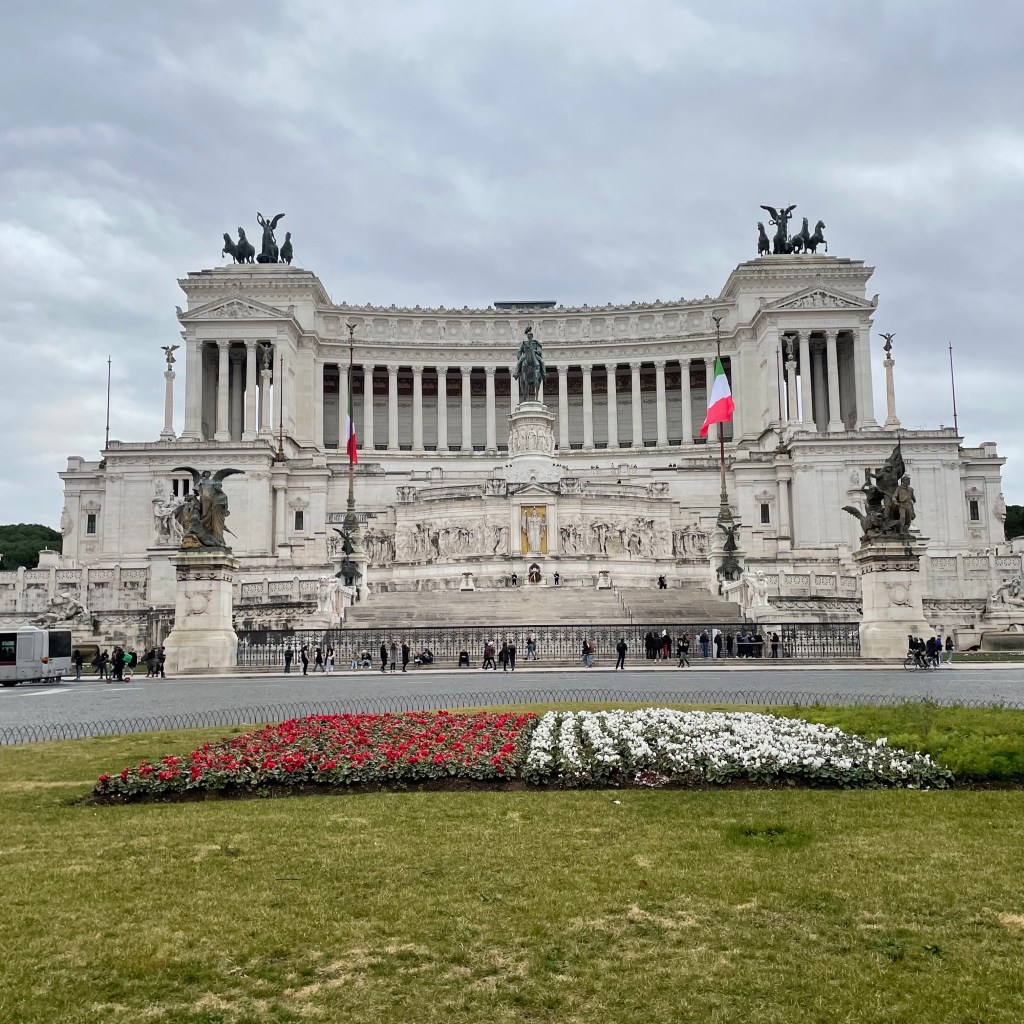
At first, I thought the monument was from the ancient times. The marbles and color scheme seemed familiar. But construction of the Altar of the Fatherland began and finished in the 1900s.
Victor Emmanuel II is depicted on a horseback. And the man is responsible for uniting Italy and bringing the country’s independence. Cool, right?
But the more I learned, and the more I’m told, the site slowly becomes a representation of how complex history is. Benito Mussolini’s fascist government used it as part of his nationalist propaganda to forward his agenda. And that leaves a conflicting feeling in the hearts of Romans.
Moving on from the heavy stuff, people have apparently dined inside the horse that Victor Emmanuel II is riding in. I would post it here but I didn’t do it, nor do I want to be sued for copyright. Long story short, the structure is huge (much like most things in the capital).
All photos were taken on February 2022.


 How I Did My Travels